
Home → Blog → Sudden Accidental Water Damage Mold: Texas Guide
Sudden Accidental Water Damage Mold: Texas Guide
May 26, 2026
Sudden Accidental Water Damage Mold: Texas Guide
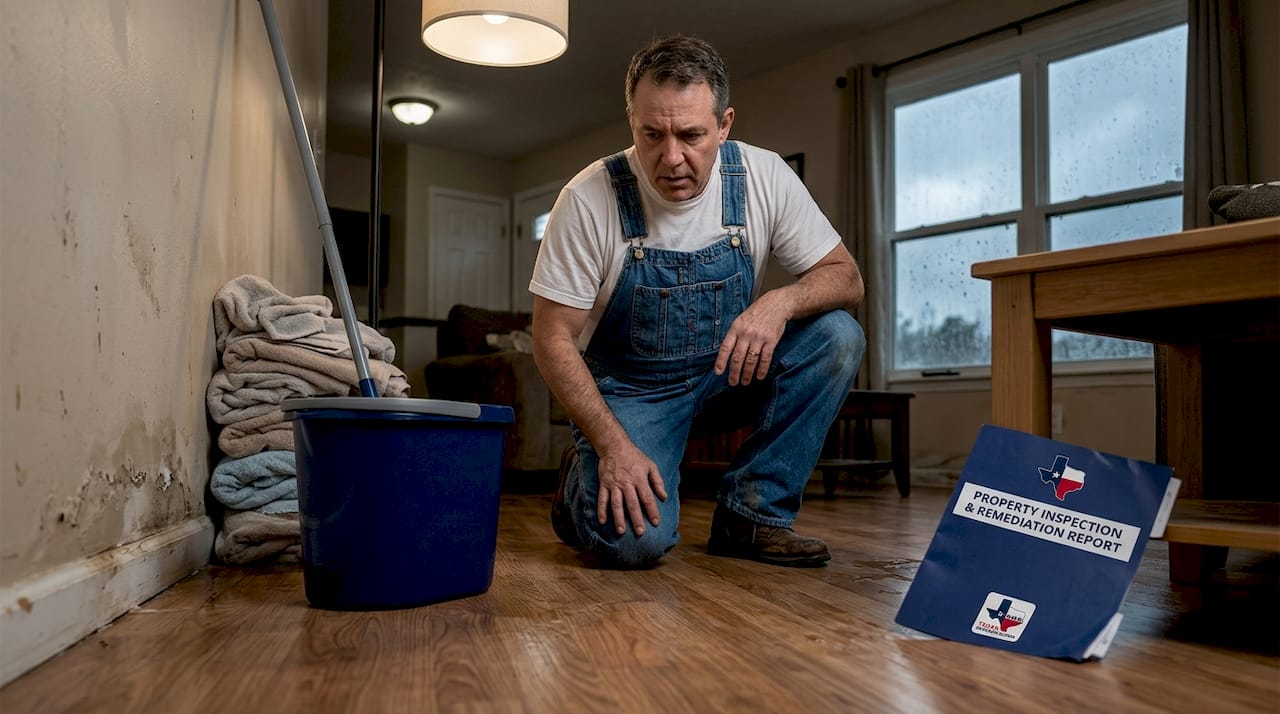
Most Texas homeowners assume their insurance covers mold. It doesn’t, at least not automatically. What is sudden accidental water damage mold? It’s the specific scenario where a fast, unexpected water event, like a burst pipe or failed appliance, causes mold to grow as a direct result. Insurance companies call this “sudden and accidental” water damage, and it’s the narrow window where mold coverage actually applies. Understanding this distinction can be the difference between a paid claim and a five-figure out-of-pocket repair.
Table of Contents
- Key Takeaways
- What sudden accidental water damage mold actually means
- How fast mold grows after water damage
- Texas insurance coverage for sudden accidental mold
- Prevention and remediation after water damage
- Real scenarios Texas homeowners face
- My take on what Texas homeowners consistently get wrong
- Find licensed mold contractors in Texas
- FAQ
Key Takeaways
| Point | Details |
|---|---|
| Sudden vs. gradual matters | Only abrupt water events like burst pipes qualify for mold coverage under most Texas policies. |
| Mold grows fast | Spores can begin colonizing within 24 hours of water exposure in Texas’s warm, humid climate. |
| Documentation wins claims | Photos, timestamps, and drying records are what separate approved claims from denied ones. |
| Dry within 48 hours | The EPA’s benchmark for stopping mold growth is complete drying within 24 to 48 hours. |
| Hire licensed contractors | Texas requires TDLR-licensed mold remediators. Hiring unlicensed workers can void your insurance coverage. |
What sudden accidental water damage mold actually means
The phrase “sudden accidental water damage mold” isn’t formal insurance language. The industry term is “sudden and accidental” water damage, and it’s the standard your insurer uses to decide whether your mold claim gets paid. Under Texas insurance guidelines, sudden events include things like a pipe that bursts overnight, a washing machine hose that fails without warning, or a water heater that ruptures. These qualify because the damage happened fast and without the homeowner’s knowledge or neglect.
Gradual damage is the opposite. A slow drip under your sink that’s been seeping for months, a roof leak you noticed but didn’t fix, or condensation buildup behind a wall are all examples that insurers classify as maintenance failures. Most home policies explicitly exclude mold that results from gradual leaks or seepage, which means the mold growing from that slow drip is entirely your financial responsibility.
Here’s what makes this especially relevant for Texas residents:
- A burst pipe during a winter freeze qualifies as sudden and accidental
- A dishwasher supply line failure that floods your kitchen qualifies
- A slow toilet seal leak that’s been staining your subfloor for six months does not qualify
- Roof damage from a storm qualifies, but only if you acted on it promptly
Pro Tip: Write down the exact date and time you discovered the water damage. That timestamp is your first line of defense if an insurer tries to reclassify your claim as gradual damage.
The mold that follows a sudden water event is what makes the claim complicated. Mold itself isn’t always covered, but when it’s a direct consequence of a covered sudden water event, most Texas policies will include it. Coverage depends on cause, not simply on whether mold exists.
How fast mold grows after water damage
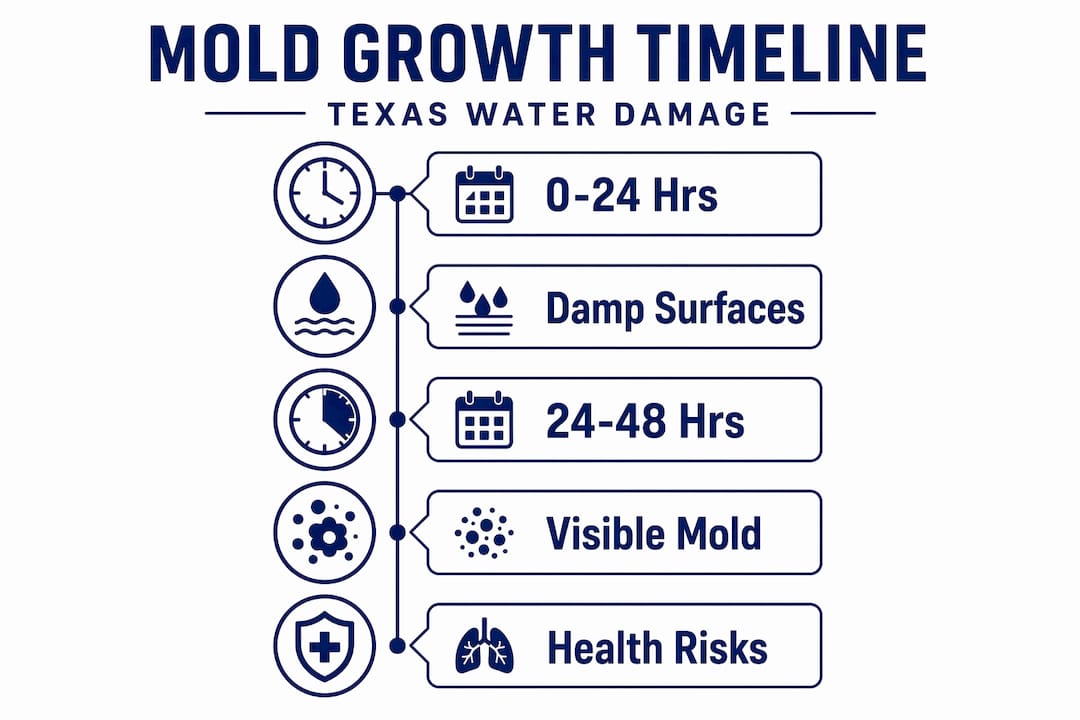
This is where many Texas homeowners get caught off guard. You think you have a few days to deal with the wet carpet or the soaked drywall. You don’t. Mold can start growing within a day after a leak, and in Texas’s warm, humid climate, that timeline can be even shorter.
The EPA recommends drying wet areas within 24 to 48 hours to prevent mold from taking hold. That’s not a suggestion. It’s the practical cutoff between a water damage cleanup and a full mold remediation job, which costs significantly more and takes longer.
Environmental factors that accelerate mold growth after water damage include:
- Temperature above 70°F — Standard in Texas homes for most of the year
- Relative humidity above 60% — Common in coastal and East Texas regions
- Porous materials — Drywall, carpet, insulation, and wood absorb moisture and feed mold colonies
- Poor ventilation — Closed-up spaces trap humidity and create ideal conditions for rapid growth
- Organic debris — Dust and organic material already present in walls and flooring act as a food source
Mold growth in warm, humid environments like Texas typically occurs within that same 24 to 48-hour window, which means a burst pipe discovered on a Friday afternoon is already a mold risk by Saturday morning.
Health consequences are real and worth taking seriously. Mold exposure can trigger respiratory issues, aggravate asthma, cause skin irritation, and produce symptoms that mimic persistent colds. Children, elderly residents, and anyone with compromised immunity face higher risks.
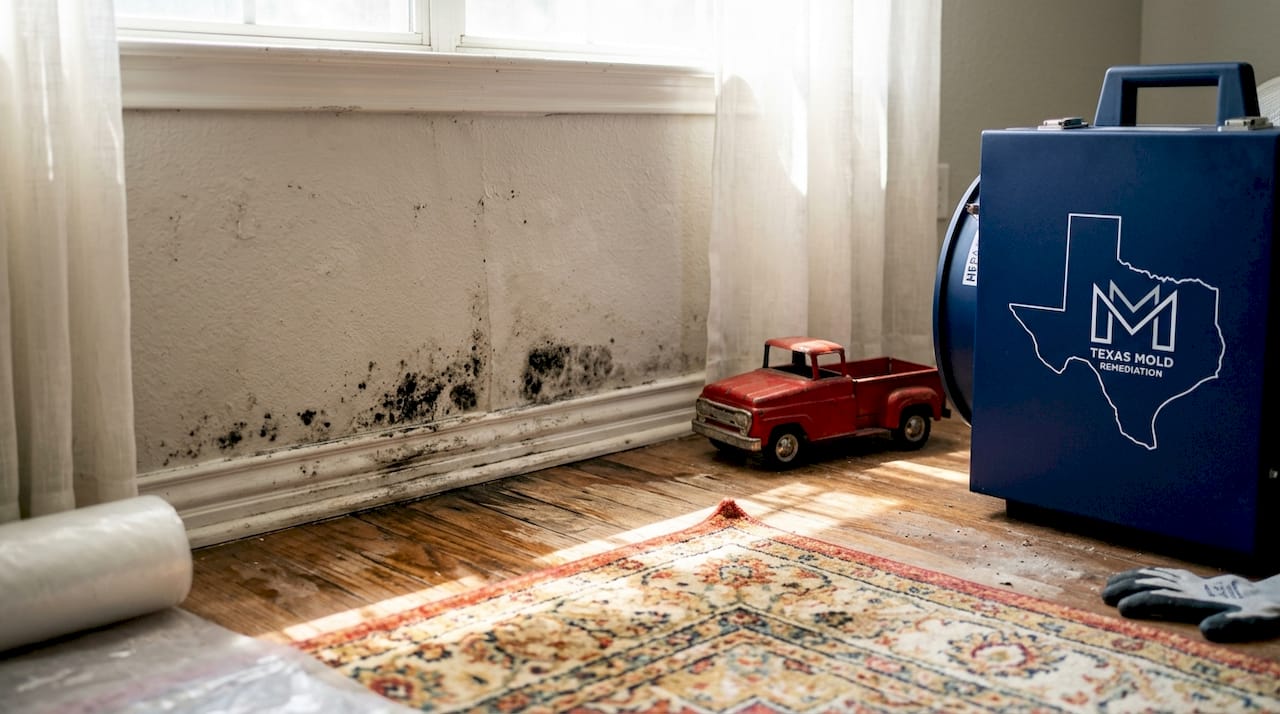
Pro Tip: Don’t rely on visual dryness to confirm a space is safe. Substrate moisture can linger invisibly inside walls and under flooring long after the surface looks dry. A professional uses moisture meters to confirm actual dryness.
Texas insurance coverage for sudden accidental mold
Texas homeowners and renters need to understand one core principle: insurers focus on cause and timing, not on the presence of mold itself. A policy that covers sudden and accidental water damage will typically extend that coverage to mold that results directly from that event. But the moment an insurer can argue the damage was gradual or that you waited too long to act, coverage evaporates.
Here’s a direct comparison of what typically is and isn’t covered under Texas homeowner policies:
| Scenario | Coverage status | Key factor |
|---|---|---|
| Burst pipe causes flooding and mold | Usually covered | Sudden, accidental, reported promptly |
| Appliance hose failure floods kitchen | Usually covered | Sudden, no prior signs of wear |
| Slow roof leak leads to attic mold | Usually denied | Gradual, maintenance-related |
| Long-term plumbing seepage behind wall | Usually denied | Gradual, not sudden or accidental |
| Mold found 3 weeks after known leak | Often denied | Delayed reporting and mitigation |
If water damage continues for 14 or more days before you report it, insurers frequently deny mold claims by citing gradual seepage exclusions, even if the original event was sudden. That two-week window is critical.
To protect your claim, focus on these steps immediately after any water event:
- Photograph the failure point, the water spread, and any visible mold from multiple angles
- Document the date and time of discovery in writing, including texts or emails to family members
- Contact your insurer within 24 to 48 hours of discovery
- Begin drying immediately, even before the adjuster arrives
- Keep receipts for fans, dehumidifiers, or any professional services you hire
Strategic evidence like photos of failure points and moisture patterns is what validates a “sudden” event when an insurer challenges the timeline. Adjusters are trained to look for signs of prior damage, so your documentation needs to tell a clear story.
Prevention and remediation after water damage
Speed is the entire game when it comes to how to prevent water damage mold. The faster you act, the less mold you’ll face and the stronger your insurance position will be.
Follow this sequence after any sudden water event:
- Stop the source. Shut off the water supply valve, whether it’s under a sink, behind a toilet, or at the main shutoff. No drying effort matters while water is still entering the space.
- Remove standing water. Use a wet/dry vacuum, mop, or towels for smaller amounts. For significant flooding, a water extraction service is faster and more thorough.
- Pull up saturated materials. Carpet, padding, and area rugs hold enormous amounts of moisture. Remove them within hours, not days.
- Set up airflow and dehumidification. Box fans, floor dryers, and dehumidifiers working together reduce humidity faster than any single method alone.
- Monitor humidity levels. Keep indoor humidity below 60%. A basic digital hygrometer costs under $15 and tells you whether your drying efforts are actually working.
When mold is already present, the approach shifts. EPA guidance recommends discarding porous materials like ceiling tiles and carpet that can’t be fully dried and cleaned. Attempting to clean mold out of saturated drywall or insulation rarely works and often spreads spores further.
For any mold growth larger than 10 square feet, the EPA recommends professional remediation. In Texas, that means hiring a contractor licensed by the Texas Department of Licensing and Regulation (TDLR). Remediation sequencing follows a specific order: stop the water source, remove bulk water, control humidity, then selectively remove and dispose of porous materials that can’t be saved.
Real scenarios Texas homeowners face
Two scenarios illustrate how much timing and documentation matter in mold claims after water damage.
Scenario one: A homeowner in the Houston area wakes up to a burst supply line under the kitchen sink. Water has soaked the cabinet floor and spread under the adjacent flooring. She photographs the failed fitting, shuts off the water, calls her insurer that morning, and rents a dehumidifier the same day. Her claim is approved because the cause was sudden, the reporting was immediate, and she documented every step.
Scenario two: A renter in a San Antonio apartment notices a soft spot in the bathroom floor but assumes the landlord will handle it. Six weeks later, the subfloor has visible black mold. The landlord’s insurer denies the claim, citing gradual damage. The renter has no documentation of when the problem started, and the insurer argues the damage accumulated over time.
The contrast is stark. As one restoration professional put it:
“The homeowners who protect themselves are the ones who treat every water event like an emergency, even the small ones. The ones who wait are the ones who fight with their insurers for months.”
Common mistakes that lead to denied claims and worsened mold include:
- Waiting to see if the area dries on its own before calling the insurer
- Failing to photograph the original failure point before making repairs
- Attempting to clean visible mold without addressing the underlying moisture source
- Hiring unlicensed contractors, which can complicate or void coverage under Texas law
My take on what Texas homeowners consistently get wrong
I’ve seen the same pattern repeat itself. A homeowner discovers water damage, does a reasonable cleanup job, and assumes the problem is solved. Three months later, there’s a musty smell, a stain reappears, and a professional finds mold behind the wall that’s been growing since the original event.
The mistake isn’t laziness. It’s underestimating how quickly mold establishes itself and how invisible it can be in the early stages. Most people have never seen mold growing inside a wall cavity. They don’t realize that what looks like a dry surface can still have enough moisture trapped in the substrate to sustain a colony for months.
What I’ve learned from watching claim disputes play out is that the homeowners who come out ahead are the ones who treat documentation like a legal record from the first minute. Not because they’re paranoid, but because they understand that an insurance adjuster reviewing a claim months later has no way to know what happened unless you show them. Your photos, your timestamps, your receipts, and your drying logs are the only evidence that exists.
The other thing I’d push back on is the instinct to handle everything yourself. For small, contained water events, that’s fine. But for anything involving walls, subfloors, or HVAC systems, a licensed Texas remediation contractor with moisture meters and professional drying equipment will get you to a genuinely dry state faster than fans from a hardware store. That speed directly affects your mold outcome and your claim.
— Tucker
Find licensed mold contractors in Texas
When sudden water damage hits your home, you need a contractor who knows Texas standards, carries proper licensing, and can document their work in a way that supports your insurance claim.
Txmoldremediation covers all 254 Texas counties with a free, searchable directory of every TDLR-licensed mold remediation contractor in the state, updated weekly from official state records. Whether you’re in a major metro or a rural county, you can verify a contractor’s license before you hire. If you’re dealing with mold growth after water damage right now, start with the Texas mold contractor directory to find licensed professionals near you. Homeowners in the greater Houston area can also check Montgomery County licensed contractors for local options with verified credentials.
FAQ
What qualifies as sudden accidental water damage?
Sudden accidental water damage refers to an abrupt, unexpected water event like a burst pipe or appliance failure, as opposed to a slow, ongoing leak. Texas insurers use this distinction to determine whether water damage and resulting mold are covered under a homeowner’s policy.
How fast does mold grow after water damage?
Mold can begin growing within 24 hours of water exposure, especially in Texas’s warm and humid climate. The EPA recommends drying affected areas within 24 to 48 hours to prevent mold from establishing.
Will my Texas homeowner’s insurance cover mold from water damage?
Coverage depends on whether the water damage was sudden and accidental. Gradual leaks and seepage are typically excluded, so mold from a slow drip is usually not covered, while mold from a sudden burst pipe often is.
What should I do immediately after sudden water damage?
Stop the water source, remove standing water, pull up saturated materials, and begin drying with fans and dehumidifiers right away. Document everything with photos and timestamps, then contact your insurer within 24 to 48 hours of discovery.
Do I need a licensed contractor for mold remediation in Texas?
Yes. Texas requires mold remediation contractors to hold an active TDLR license. Hiring unlicensed workers can complicate your insurance claim and may leave you without legal recourse if the work is done improperly.
Recommended
Find a Licensed Mold Contractor in Your Area
Search by city to find TDLR-verified mold remediation contractors near you — or call for a free consultation.