
Home → Blog → Structure Mold Remediation Contractor Contract in Texas
Structure Mold Remediation Contractor Contract in Texas
May 24, 2026
Structure Mold Remediation Contractor Contract in Texas
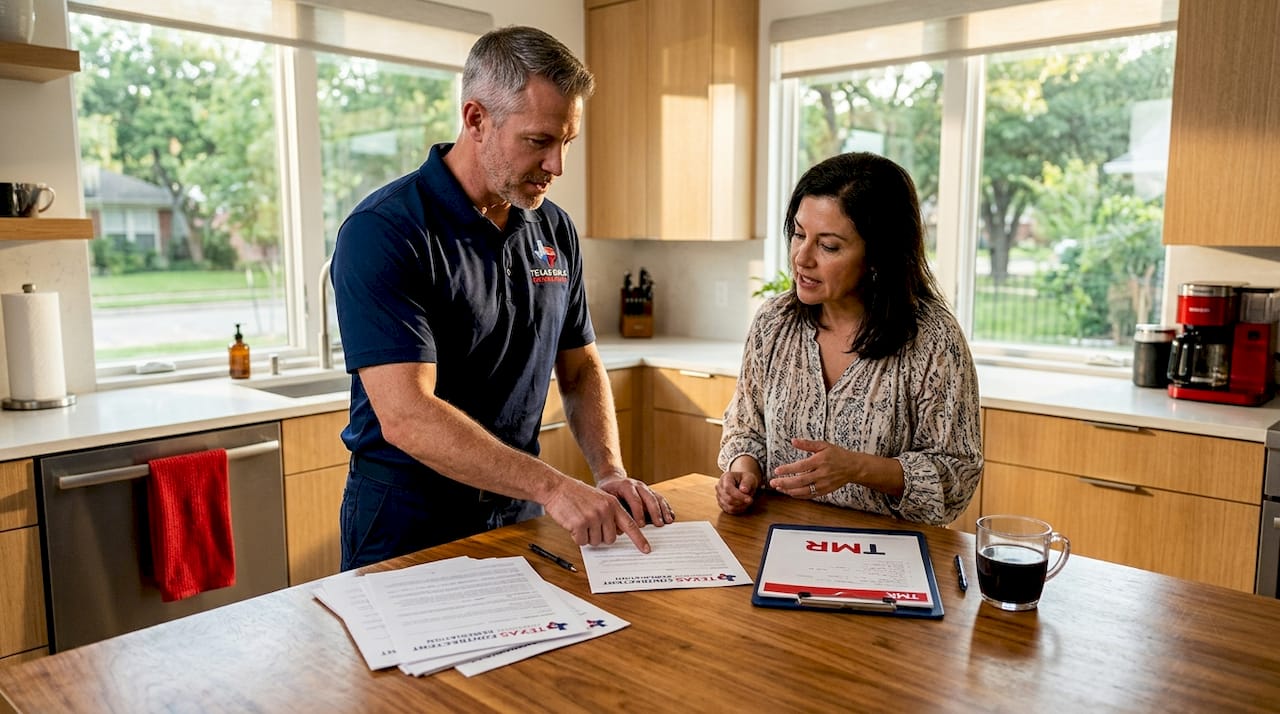
Hiring a mold contractor without a solid contract is one of the most expensive mistakes Texas homeowners make. A poorly structured mold remediation contractor contract leaves you exposed to shoddy work, hidden costs, and legal liability that can follow you through a home sale or insurance claim. Texas has specific licensing laws, mandatory remediation procedures, and documentation requirements that your contract must reflect. This guide walks you through exactly what belongs in your agreement, what to demand from any contractor you hire, and how to protect yourself from the most common contract traps.
Table of Contents
- Key takeaways
- Structure mold remediation contractor contract: Texas legal requirements
- What every mold remediation services contract must include
- How to structure and negotiate your remediation contract
- Common contract pitfalls to avoid
- Verifying successful remediation and documenting completion
- My take on why most mold contracts fail homeowners
- Find licensed Texas mold contractors before you sign anything
- FAQ
Key takeaways
| Point | Details |
|---|---|
| Texas licensing is non-negotiable | Only TDLR-licensed contractors can legally perform mold remediation on Texas structures. |
| Scope of work must be specific | Vague estimates like “remove mold” are non-compliant and leave you with no legal recourse. |
| Moisture correction must be in the contract | Without fixing the moisture source, mold returns and costs you more money. |
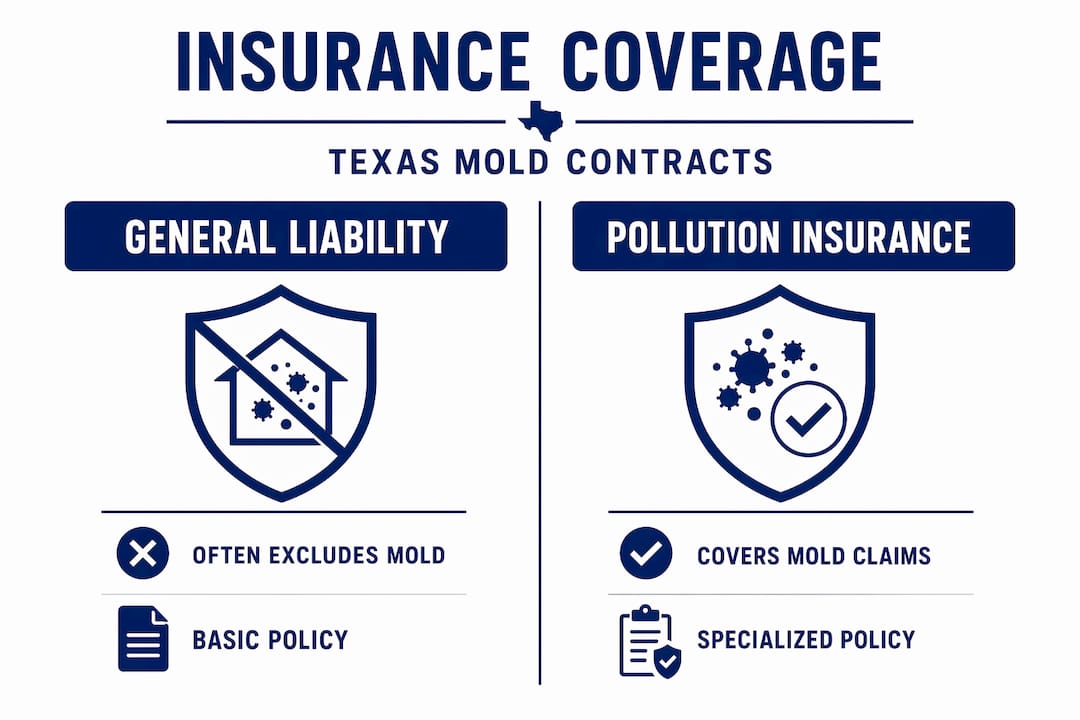
| Pollution Occurrence Insurance is required | General liability often excludes mold; verify specific mold coverage before signing anything. |
| Post-remediation reports protect you | A written clearance report following ANSI/IICRC S520 standards is your proof of completed work. |
Structure mold remediation contractor contract: Texas legal requirements
Texas does not treat mold remediation like a general handyman job. The state requires contractors to hold an active license issued by the Texas Department of Licensing and Regulation (TDLR) before performing any remediation work on a structure. If your contractor cannot show you a current TDLR license, stop the conversation there.
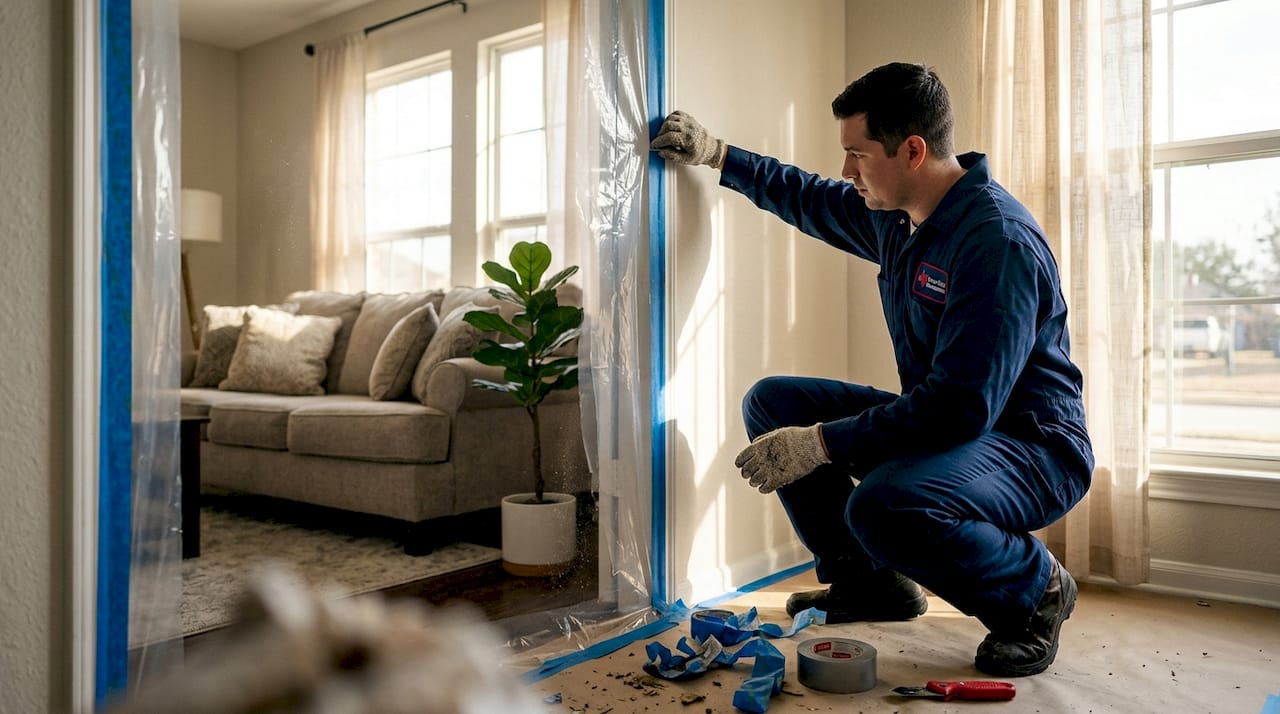
Beyond licensing, Texas law mandates specific remediation procedures that must be reflected in your contract. Licensed contractors follow strict procedures including containment barriers, negative air pressure systems, and approved antimicrobial treatments to protect occupant safety. If your proposed contract does not mention these procedures by name, that is a red flag.
Here is what Texas law and industry standards require your mold removal contractor agreement to address:
- TDLR license number listed on the contract with expiration date
- Containment protocols specifying physical barriers and negative air pressure equipment
- Antimicrobial treatment methods and products to be used
- PPE requirements for workers during remediation
- Disposal procedures for contaminated materials, including manifests
- Certificate of Mold Damage Remediation to be provided upon project completion
On the insurance side, general liability insurance often excludes mold-related damage. You need to verify that your contractor carries Pollution Occurrence Insurance, which is the policy specifically designed to cover mold remediation liabilities. Ask for a certificate of insurance before you sign anything, and confirm the policy covers the full scope of your project.
Pro Tip: Call the TDLR directly or use a free verification resource like Txmoldremediation to confirm your contractor’s license is active before you ever request a bid.
What every mold remediation services contract must include
A complete, legally sound mold remediation services contract is not a one-page estimate. A single-page estimate stating only “remove mold” is inadequate and non-compliant with industry best practices. Here is what a thorough structure mold removal agreement looks like in practice.
Scope of work
The scope must be site-specific. That means a floor plan or diagram identifying every affected area, the types of materials involved (drywall, insulation, subfloor), and the extent of contamination. It should also document the moisture source that caused the mold, because without that, the job is incomplete before it starts.
Pricing breakdown
| Contract Element | What to Look For | Red Flag |
|---|---|---|
| Labor costs | Itemized by hour and crew size | Lump sum with no breakdown |
| Material costs | Listed by product and quantity | “Materials as needed” language |
| Disposal fees | Separate line item with weight estimates | Bundled into a single total |
| Equipment rental | HEPA units, air scrubbers listed individually | No equipment listed at all |
| Post-remediation testing | Included or quoted separately | Not mentioned in the contract |
Remediation methods and containment strategy
The contract must describe how the contractor will isolate the work area. This includes the type of containment barriers used, whether a negative air pressure system will be running during work, and how the HEPA vacuuming and cleaning sequence will proceed. Professional contracts specify inspection, containment, material removal, HEPA cleaning, and final verification as distinct steps, not a vague process.
Timeline and payment terms
Get specific dates. A start date, an estimated completion date, and milestone-based payment terms protect you from contractors who collect a large deposit and disappear. Never pay more than 30 to 40 percent upfront.
Warranty terms
A solid mold removal contractor agreement includes a warranty on the remediation work itself. Warranties often cover one year of anti-fungal protection provided the homeowner controls the moisture source. Make sure the warranty is written, not verbal, and specifies exactly what triggers a warranty claim.
How to structure and negotiate your remediation contract
Getting a good contract starts before you ever sit down with a contractor. Follow this process to protect yourself from the start.
-
Verify credentials first. Before requesting any bids, confirm the contractor holds an active TDLR license. Use Txmoldremediation’s county directories, such as the licensed contractors in Hays County or Montgomery County, to find verified professionals in your area.
-
Request a written assessment before any contract. Contractor mold assessment services should produce a written report identifying affected areas, moisture sources, and recommended remediation methods. If a contractor skips the assessment and jumps straight to a price, that tells you something important about how they operate.
-
Ask these specific questions before signing:
- What containment method will you use and for how long?
- How will you document moisture source correction?
- Will you provide a post-remediation verification report?
- What does your warranty cover and what voids it?
- Can I see proof of your Pollution Occurrence Insurance?
-
Push for time and material pricing. Lump sum billing often masks high hourly labor costs. A time and material contract lets you see exact labor rates, hours worked, and materials used. It takes more attention on your end, but it prevents inflated pricing hidden inside a single number.
-
Negotiate moisture correction into the scope. Contracts must include moisture correction alongside mold removal to avoid repeated damage. If a contractor refuses to address the moisture source or tells you that is “someone else’s job,” walk away.
-
Get the post-remediation report in writing before final payment. Make this a contract condition. Final payment is released only after you receive the clearance report.
Pro Tip: Get at least three bids and compare them line by line, not just by total price. The cheapest bid often wins by leaving out steps the other contractors included.
Common contract pitfalls to avoid
Even homeowners who know to ask for a written contract can still get burned by what ends up inside it. Here are the mistakes that show up most often in mold remediation projects.
-
Vague scope language. Any contract that uses phrases like “remove visible mold” or “treat affected areas” without specifying materials, square footage, and methods gives the contractor room to do the minimum and call it done.
-
No moisture source correction. This is the single biggest predictor of mold recurrence. Ignoring moisture correction causes persistent mold and drives up your long-term costs significantly.
-
Inadequate containment provisions. If the contract does not specify negative air pressure and physical barriers, spores will spread to unaffected areas during work. DIY remediation and inadequate containment spread spores and worsen health risks for your household.
-
No insurance verification clause. Include a line in the contract stating that work cannot begin until you have received and reviewed a current certificate of Pollution Occurrence Insurance.
-
Lump sum pricing with no breakdown. You cannot compare bids or verify fair pricing without line items. This is also how contractors hide the cost of skipping steps.
“A contract that does not specify what the contractor will do is really just a receipt for money you have already decided to spend. It protects no one but the contractor.”
Verifying successful remediation and documenting completion
Signing off on a mold remediation job without proper documentation is a mistake that can haunt you at resale or during an insurance claim. Here is what your final project documentation should include.
| Documentation Item | Purpose | Who Provides It |
|---|---|---|
| Post-remediation visual inspection report | Confirms no visible mold remains | Licensed contractor |
| Moisture mapping results | Verifies moisture levels are within normal range | Contractor or independent inspector |
| Third-party air and surface sampling | Independent confirmation of clearance | Certified industrial hygienist |
| Disposal manifests | Proves contaminated materials were properly removed | Contractor |
| Certificate of Mold Damage Remediation | Required by Texas law for project completion | Licensed contractor |
| Warranty document | Written guarantee of work performed | Contractor |
The most protective step you can take is hiring an independent third-party inspector to conduct post-remediation air and surface sampling. This person works for you, not the contractor. Their clearance report carries weight with insurers and future buyers.
A post-remediation report following ANSI/IICRC S520 standards is your legal proof that the work was done correctly. Keep every document in a dedicated file. If you ever sell the home or file an insurance claim, that file is what stands between you and a very expensive dispute.
Transparency about contractor credentials and protocols is a reliable indicator of a contractor who prioritizes safety over speed. If a contractor resists providing documentation or gets defensive when you ask for a clearance report, that tells you everything you need to know.
My take on why most mold contracts fail homeowners
I’ve reviewed a lot of mold remediation contracts over the years, and the pattern is almost always the same. The homeowner was in a stressful situation, they wanted the problem gone quickly, and they signed whatever the contractor put in front of them. That urgency is exactly what bad actors count on.
What I’ve learned is that moisture correction is the unsung hero of every successful remediation. I’ve seen homeowners spend thousands on mold removal only to have the problem return within six months because the contractor never fixed the leaking pipe or the inadequate bathroom ventilation that caused it. A contract that does not address the moisture source is not a remediation contract. It is a temporary cosmetic fix with a price tag attached.
My strongest recommendation is this: treat the post-remediation report as a non-negotiable condition of final payment. Write it into the contract before you sign. If a contractor balks at providing written clearance documentation, that tells you they are not confident in their own work. The best mold remediation contracts I’ve seen are the ones where the contractor was eager to provide documentation because they knew their work would pass.
Clear contracts do not just protect your wallet. They protect your health, your home’s resale value, and your ability to make an insurance claim if something goes wrong later.
— Tucker
Find licensed Texas mold contractors before you sign anything
Before you structure any mold remediation contractor contract, you need to know the contractor you are dealing with is actually licensed to do the work.
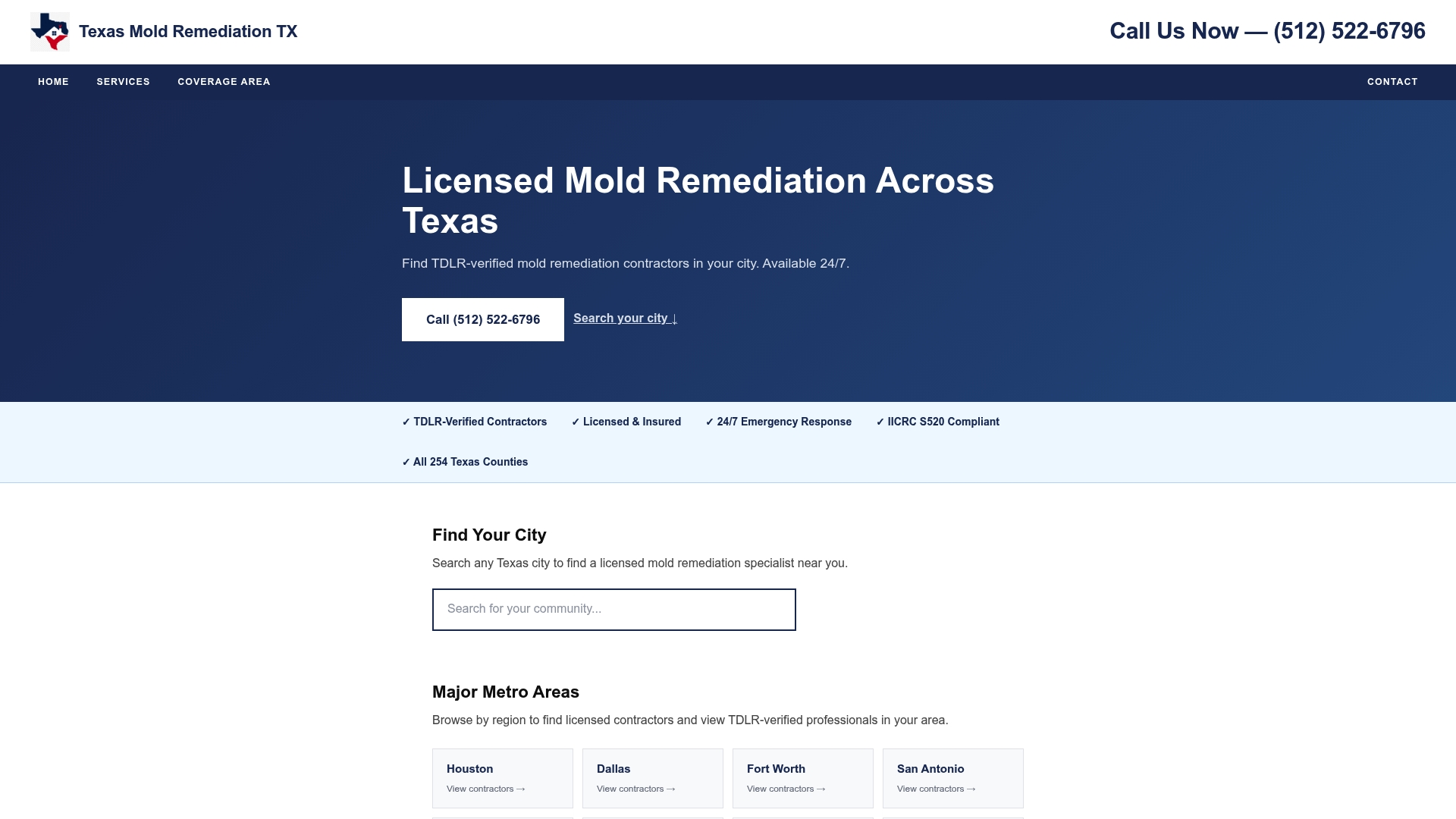
Txmoldremediation is a free public resource that covers all 254 Texas counties and pulls contractor license data directly from TDLR, updated weekly. You can verify any contractor’s license status in minutes and find licensed mold remediation contractors in Texas near you using the county-by-county directory. Whether you are in Comal County or anywhere else in the state, the directory shows you who is currently licensed and active. Use it before you request a single bid.
FAQ
What must a Texas mold remediation contract include?
A Texas mold remediation contract must include the contractor’s TDLR license number, a detailed scope of work with affected areas identified, containment and PPE procedures, itemized pricing, moisture source correction, and a post-remediation verification report.
What is Pollution Occurrence Insurance in mold remediation?
Pollution Occurrence Insurance specifically covers mold-related liabilities and is separate from general liability insurance, which often excludes mold claims. Always request a certificate of this coverage before signing a remediation service provider contract.
What is a mold remediation contractor warranty?
A mold remediation contractor warranty is a written guarantee that covers the remediated area, typically for one year, provided the homeowner maintains moisture control. It should specify what conditions void the warranty and how to file a claim.
Why does moisture correction matter in a mold removal agreement?
Without moisture source correction written into the contract, mold will return. Moisture correction prevents recurrence and is considered a mandatory part of any professionally structured remediation agreement.
How do I verify a mold contractor’s license in Texas?
You can verify a contractor’s active TDLR license through the TDLR’s public database or through Txmoldremediation, which provides a free, weekly-updated county directory of every licensed mold contractor in Texas.
Recommended
Find a Licensed Mold Contractor in Your Area
Search by city to find TDLR-verified mold remediation contractors near you — or call for a free consultation.