
Home → Blog → HVAC Mold Risk Property Management Tips for Texas
HVAC Mold Risk Property Management Tips for Texas
May 25, 2026
HVAC Mold Risk Property Management Tips for Texas
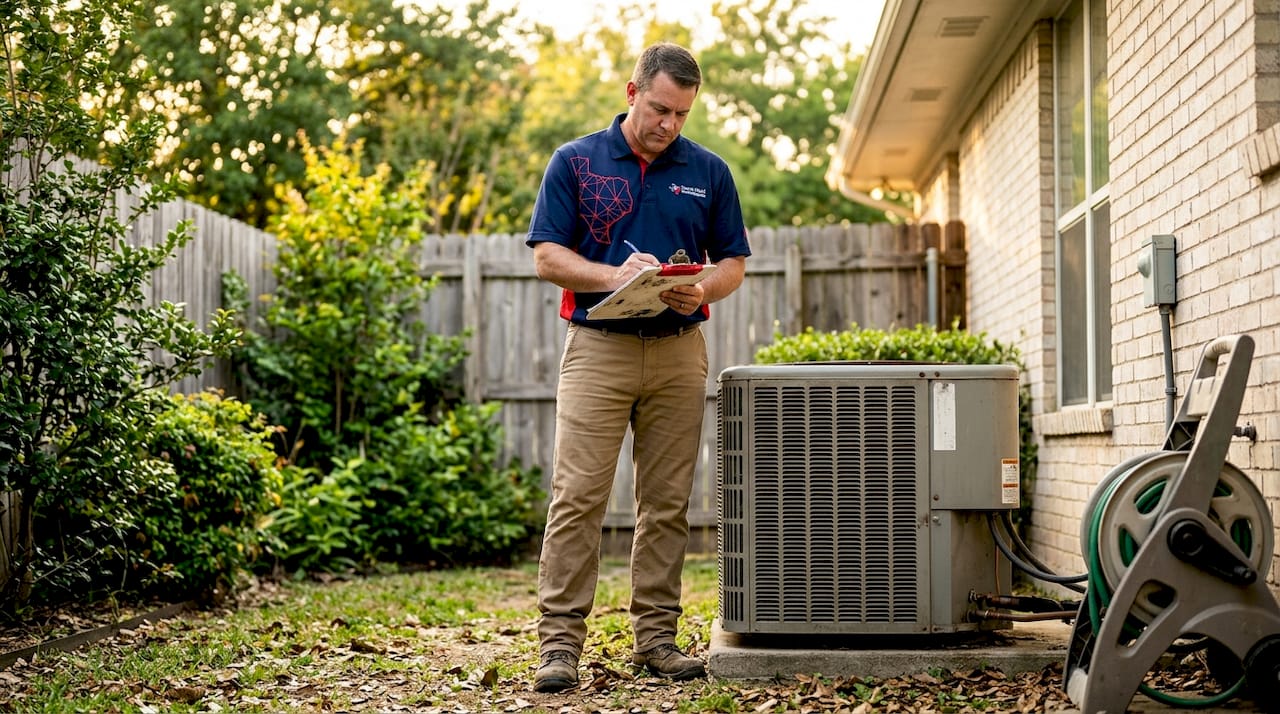
Texas humidity doesn’t forgive neglect. If you manage residential or commercial properties in this state, HVAC mold risk property management tips aren’t optional reading. They’re the difference between a clean inspection and a costly remediation bill. Mold growing inside ductwork, drain pans, and evaporator coils stays invisible until tenants start complaining about musty odors or respiratory symptoms. By then, you’re already behind. This guide gives you the specific, practical steps to stay ahead of mold before it becomes a legal, financial, or health crisis.
Table of Contents
- Key takeaways
- 1. Understand the HVAC mold risk factors specific to Texas
- 2. Inspect your ductwork for leaks and biological buildup
- 3. Build a routine HVAC maintenance checklist
- 4. Avoid the fan-always-on operational mistake
- 5. Right-size HVAC systems when replacing equipment
- 6. Compare mold prevention solutions by cost and effectiveness
- 7. Respond to moisture incidents within 48 hours
- 8. Manage tenant communication and stay compliant with Texas regulations
- My honest take on HVAC mold management in Texas
- Find licensed mold remediation contractors in your Texas county
- FAQ
Key takeaways
| Point | Details |
|---|---|
| Control humidity first | Keep indoor relative humidity between 30% and 50% to stop mold before it starts. |
| Act within 48 hours | Moisture incidents not stabilized quickly can triple restoration costs due to rapid mold growth. |
| Avoid the fan-on mistake | Running HVAC fans continuously during humid months pushes moisture from coils into living spaces. |
| Right-size your HVAC | Oversized systems cool too fast without removing enough humidity, creating mold-friendly conditions. |
| Document everything | Humidity logs and inspection records protect you legally and support insurance claims. |
1. Understand the HVAC mold risk factors specific to Texas
Texas sits in a climate zone where summer humidity regularly pushes outdoor relative humidity above 80%. That moisture finds its way inside through every gap, door, and duct penetration. The first step in any HVAC mold risk property management strategy is knowing exactly what conditions you’re fighting.
Indoor humidity between 30% and 50% is the safe operating range. Once you cross 60%, mold spores that are always present in the air find enough moisture to colonize surfaces inside your ducts, drain pans, and air handlers within days.
Watch for these early warning signs in your properties:
- Musty or earthy odors near supply vents
- Visible dark streaks or discoloration around vent covers
- Tenant complaints about allergy-like symptoms that improve when they leave the unit
- Standing water in condensate drain pans during routine inspections
- Frost or excessive condensation on refrigerant lines
Pro Tip: Install continuous humidity sensors in common areas and mechanical rooms, not just the thermostat zone. A single thermostat reading tells you almost nothing about what’s happening inside the air handler cabinet.
Airflow and pressure balancing matter too. Negative pressure in a unit pulls humid outdoor air through wall cavities and around door frames. A qualified HVAC technician can measure static pressure and identify zones where your system is pulling in more moisture than it can handle.
2. Inspect your ductwork for leaks and biological buildup
Leaky ductwork is one of the most underestimated contributors to mold risk in Texas properties. Duct leaks reduce HVAC efficiency by 15 to 25% in damp climates and allow humid attic or crawlspace air to enter the conditioned airstream directly. That air carries moisture, dust, and organic particles that combine inside the duct lining to create what technicians call biological paste. It’s exactly what it sounds like.
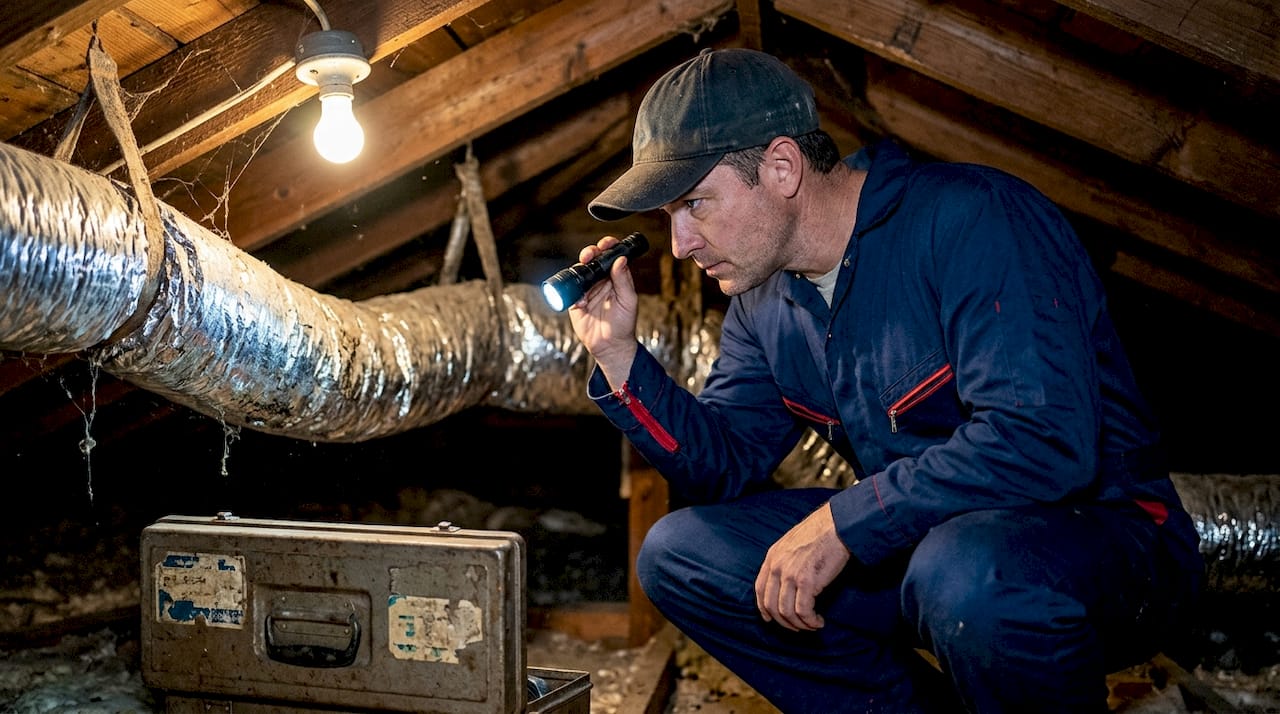
Schedule a duct leakage test every two to three years on properties older than ten years. Look specifically at flex duct connections, where the flexible tubing meets the metal plenum or register boot. These joints loosen over time, especially in attics that experience extreme temperature swings between winter and summer.
Seal any identified leaks with mastic sealant, not standard duct tape. Duct tape fails within a few years in high-temperature attic environments. Mastic holds.
3. Build a routine HVAC maintenance checklist
Reactive maintenance is the single biggest driver of mold problems in managed properties. A structured inspection schedule eliminates most of the conditions that allow mold to take hold. Here’s what your checklist should cover every quarter:
- Condensate drain lines: Flush with a diluted bleach solution or commercial drain cleaner to prevent algae and mold blockages
- Drain pans: Check for standing water, cracks, or rust that prevents proper drainage
- Evaporator coils: Inspect for dust buildup, which traps moisture and feeds mold growth
- Duct insulation: Look for tears, compression, or moisture damage on insulated flex ducts
- Filter condition: Replace filters before they become clogged, not on a fixed calendar date
On filter selection, MERV 8 to MERV 13 is the practical range for most residential and light commercial systems. Filters above MERV 13 can restrict airflow enough to cause coil icing, which creates its own moisture problem. Match the filter rating to what the system manufacturer specifies.
Pro Tip: Keep the area around your air handler clear of stored items and debris. Technicians who can access the unit quickly during an inspection catch problems earlier. A cluttered mechanical room is a deferred maintenance bill waiting to happen.
4. Avoid the fan-always-on operational mistake
This one catches a lot of property managers off guard. Setting the HVAC fan to the “ON” position rather than “AUTO” feels like it should improve air circulation and comfort. During humid Texas summers, it does the opposite.
Running the fan continuously during humid months prevents moisture that condenses on the evaporator coil from draining properly. Instead of dripping into the drain pan and exiting through the condensate line, that moisture gets blown back into the duct system and distributed throughout the property. You end up with elevated humidity in every room the system serves.
Set thermostats to “AUTO” fan mode from April through October in Texas. If tenants or building occupants complain about air quality or stuffiness, address it with ventilation improvements or a dedicated dehumidifier rather than leaving the fan running continuously.
5. Right-size HVAC systems when replacing equipment
Oversized HVAC systems cool spaces too quickly without running long enough to extract meaningful humidity from the air. The compressor shuts off before the system completes a full dehumidification cycle, leaving indoor humidity elevated even when the temperature feels comfortable. This is called short cycling, and it creates near-perfect conditions for mold growth on evaporator coils and in ductwork.
When replacing a unit, require your HVAC contractor to perform a Manual J load calculation. This is the industry-standard method for sizing equipment to the actual heat gain and moisture load of a specific building. Don’t let anyone size a replacement unit by simply matching the tonnage of the old system. Old systems are frequently oversized to begin with.
For Harris County properties and other high-humidity coastal areas, ask your contractor about variable-speed air handlers. These units run at lower speeds for longer periods, which dramatically improves dehumidification compared to single-speed systems.
6. Compare mold prevention solutions by cost and effectiveness
Not every property or budget calls for the same approach. Here’s a practical comparison of the main options available to Texas property managers:
| Solution | Mold prevention effectiveness | Approximate cost | Best for |
|---|---|---|---|
| Basic hygrometers | Monitoring only, no active control | $15 to $50 per unit | All property types as a baseline tool |
| MERV 8-13 filters | Moderate spore reduction | $10 to $40 per filter | Standard residential units |
| Smart humidity sensors | Real-time alerts, audit trail | $50 to $150 per sensor | Multi-unit and commercial properties |
| Whole-home dehumidifier | High, consistent humidity control | $1,200 to $2,800 installed | High-humidity zones, coastal Texas |
| HEPA filtration upgrade | High spore capture rate | $500 to $1,500 per system | Properties with prior mold history |
| Professional remediation | Addresses active mold growth | $1,500 to $10,000+ | Post-incident or confirmed mold presence |
Whole-home dehumidifiers consistently outperform standard air conditioning systems at moisture removal in regions with sustained high humidity. A standard AC unit removes humidity as a byproduct of cooling. A dedicated dehumidifier removes humidity as its primary function, regardless of whether cooling is needed.
Pro Tip: For properties in Southeast Texas or along the Gulf Coast, budget for a whole-home dehumidifier as part of your standard unit turnover package. The upfront cost is far less than a single mold remediation job.
7. Respond to moisture incidents within 48 hours
Speed is everything after a water intrusion event. Failing to stabilize moisture within 24 to 48 hours results in an estimated 300% increase in restoration costs as mold establishes itself in wall cavities, subfloor assemblies, and HVAC components.
Follow this response sequence after any water intrusion event:
- Stop the source before anything else. A running leak makes drying equipment useless.
- Extract standing water with a wet vacuum or truck-mounted extraction unit within the first two hours.
- Deploy drying equipment including air movers and commercial dehumidifiers targeted at affected areas.
- Track daily readings using a moisture meter on walls, floors, and structural components.
- Document everything with timestamped photos and moisture readings at each inspection point.
Psychrometric drying requires managing temperature, humidity, and airflow together to bring all materials below moisture limits within three to five days. If wall moisture content exceeds 16%, standard surface drying won’t reach the problem. You may need to remove baseboards or drill weep holes to allow trapped moisture to escape.
Pro Tip: A basic hygrometer used during every walkthrough creates an audit trail that directly supports insurance claims. Adjusters respond to documented readings, not verbal accounts.
8. Manage tenant communication and stay compliant with Texas regulations
Tenant complaints about odors, visible mold, or respiratory issues are not just customer service problems. Under the Texas Property Code, landlords have a legal duty to maintain rental properties in a condition that does not materially affect the health or safety of an ordinary tenant. Ignoring mold complaints creates liability.
Build a clear protocol for handling mold-related tenant communications:
- Respond to written complaints in writing within 24 hours, even if just to acknowledge receipt
- Schedule an inspection within 72 hours of any mold or moisture complaint
- Provide tenants with written notice before any remediation work begins, including scope and timeline
- Keep copies of all inspection reports, contractor invoices, and tenant correspondence
Texas law requires a Certificate of Mold Damage Remediation for any professional remediation work. Hiring unlicensed contractors can void your insurance coverage and expose you to liability if the mold returns. Verify that every contractor you hire holds a current, active TDLR license before work begins.
Maintain a running log of HVAC maintenance dates, filter changes, humidity readings, and any moisture incidents. This documentation protects you in disputes and demonstrates good-faith property management if a tenant files a complaint with a local housing authority.
My honest take on HVAC mold management in Texas
I’ve reviewed enough Texas property management situations to say this plainly: most mold problems in HVAC systems are not bad luck. They are deferred maintenance and ignored humidity readings.
What I see consistently is property managers who treat mold as a cleanup problem rather than a moisture management problem. They pay for remediation, skip the root cause analysis, and end up paying again eighteen months later. Mold remediation without fixing the underlying moisture source is not remediation. It’s a temporary cosmetic fix.
The managers who genuinely stay ahead of mold in Texas do two things differently. They invest in monitoring before they have a problem, and they treat HVAC maintenance as a non-negotiable operating expense rather than something to defer when budgets get tight. A $150 smart sensor and a quarterly maintenance contract cost a fraction of what a single mold remediation job runs in a multi-unit building.
Texas climate is not going to get more forgiving. The properties that hold their value and avoid tenant turnover are the ones where someone is paying attention to humidity year-round, not just after something goes wrong.
— Tucker
Find licensed mold remediation contractors in your Texas county
When prevention isn’t enough and you’re facing active mold growth in an HVAC system or anywhere else in a property, who you hire matters enormously under Texas law.
Txmoldremediation covers all 254 Texas counties with weekly-updated directories of every TDLR-licensed mold remediation contractor in the state. If you manage properties in the Houston metro area, Montgomery County licensed contractors are listed and verified. For Southeast Texas portfolios, Orange County remediation services are available with the same TDLR verification. You can also browse the full Texas mold contractor directory to find licensed professionals anywhere in the state. Every listing is sourced directly from the Texas Department of Licensing and Regulation.
FAQ
What humidity level prevents mold in HVAC systems?
Keep indoor relative humidity between 30% and 50%. Levels above 60% create high-risk conditions where mold can colonize HVAC components within days.
How quickly does mold grow after a water leak in a Texas property?
Mold can begin establishing itself within 24 to 48 hours of a moisture intrusion event. Acting immediately to extract water and deploy drying equipment is the single most cost-effective mold prevention step you can take.
Does HVAC system size affect mold risk?
Yes. Oversized systems short-cycle, meaning they cool the air quickly but don’t run long enough to remove adequate humidity. This leaves indoor moisture levels elevated even when temperatures feel comfortable, which directly promotes mold growth on evaporator coils.
What does Texas law require for mold remediation in rental properties?
Texas requires a Certificate of Mold Damage Remediation for professional mold remediation work. Landlords must also maintain properties in a condition that does not materially affect tenant health or safety under the Texas Property Code.
Are whole-home dehumidifiers worth the cost for Texas rental properties?
For properties in high-humidity regions of Texas, yes. Whole-home dehumidifiers actively remove moisture as their primary function, outperforming standard AC units at humidity control and significantly reducing the conditions that allow mold to grow.
Recommended
Find a Licensed Mold Contractor in Your Area
Search by city to find TDLR-verified mold remediation contractors near you — or call for a free consultation.